
Restylane Kysse
Product names are trademarks of their respective owners. LookPrep is independent and is not affiliated with, sponsored by, or endorsed by any manufacturer. Names are used only to identify the products a person may discuss with a qualified provider.
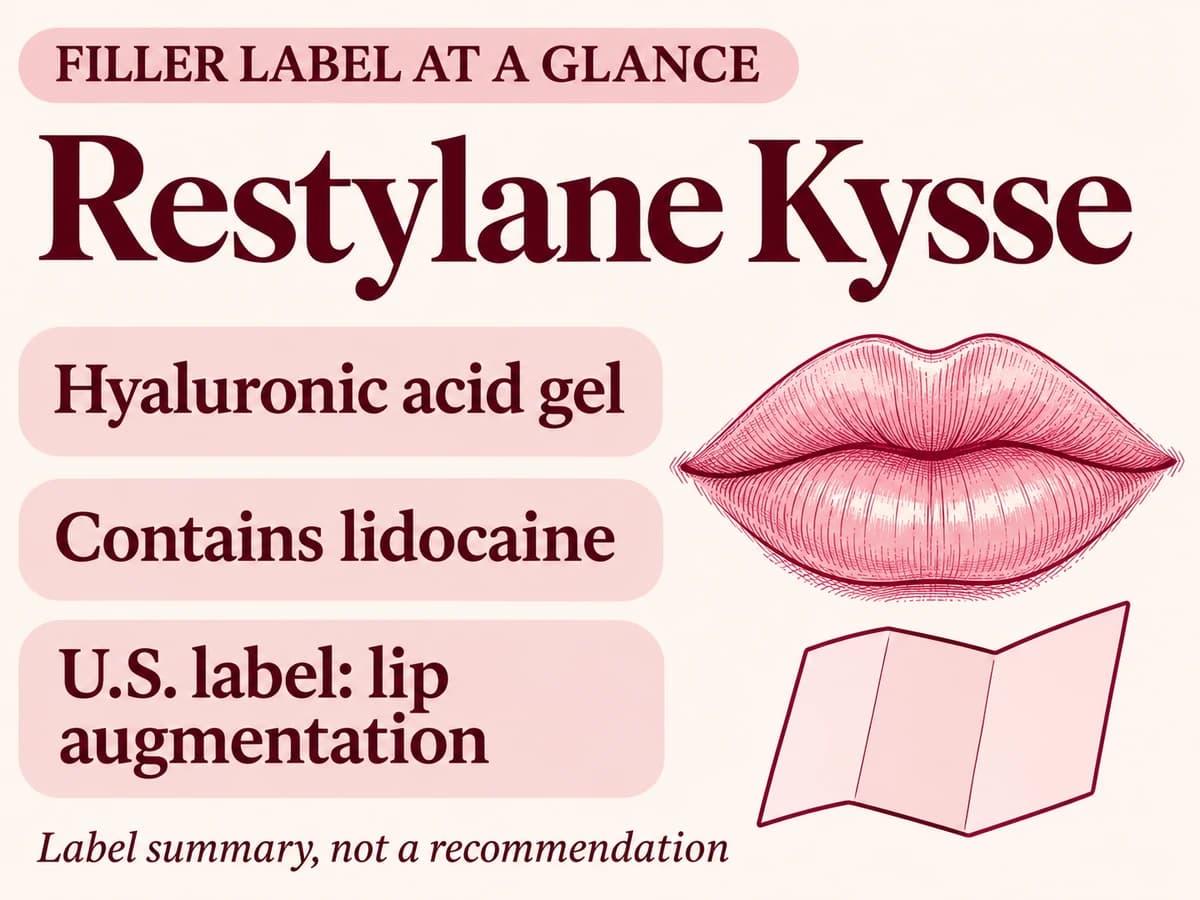
At a glance
- Exact product name
- Restylane Kysse
- Applicant on the FDA summary
- Q-Med AB and Galderma Research and Development, LLC (both described as Galderma affiliates)
- FDA record (PMA supplement)
- P140029/S021
- FDA approval of this supplement
- What the U.S. label covers
- Injection into the lips for lip augmentation, and correction of upper perioral rhytids
- Contains lidocaine
- Yes, 3 mg/mL lidocaine hydrochloride
- Hyaluronic acid concentration
- 20 mg/mL sodium hyaluronate, crosslinked
- Minimum age on the label
- Over 21
Checked against the FDA summary and the FDA database entry on . Sources 1 and 2, listed at the end of this page.
Reading the U.S. label
Restylane Kysse is a biodegradable gel made from bacterial-origin hyaluronic acid (20 mg/mL sodium hyaluronate crosslinked with BDDE) and 3 mg/mL lidocaine hydrochloride to reduce discomfort during injection. Under U.S. approval P140029/S021, its cleared uses are limited to adults over 21—meaning aged 22 and older—for lip augmentation and for correcting upper perioral rhytids. The FDA record specifies the upper perioral area for wrinkle correction rather than lower-lip creases or general facial folds. If someone describes a treatment for ‘lip lines’, ask them to point out the exact skin they mean and clarify whether that placement falls inside the U.S. approval or is off-label.
The timing in the clinical study also matters when reading durability claims. Participants were allowed an optional touch-up at Week 4, and both the 8-week and 48-week milestones were measured after the last injection rather than always from the first appointment. Only the 8-week fullness score tested Kysse head-to-head against a control filler. Later figures tracked the Kysse group alone, with blinded fullness responder rates tapering gradually from 88% at Week 8 to 77% at Week 24 and 60% at Week 48—lower than the 78% of participants who still judged their own lip appearance improved or better at Week 48. Because the gel breaks down gradually, those percentages describe group responder rates under trial conditions rather than a guaranteed duration for any individual.
The 30-day diary figures and label precautions are equally important for setting expectations before booking. Almost every participant recorded at least one lip reaction after initial treatment—most commonly swelling, tenderness, bruising and lumps or bumps—and while roughly half resolved within two weeks, the other half lasted longer than 14 days and nearly three in ten participants said their worst reaction affected daily activities. In the FDA summary, reactions after touch-up injections were generally less frequent, milder and shorter than after the initial visit. Beyond the allergy contraindications, the U.S. labelling notes that injections around the lips can trigger cold sore reactivation in people with a history of herpes simplex, advises caution for patients taking immunosuppressive therapy, and states that delayed inflammatory papules should be evaluated and treated as potential soft-tissue infections.
Source 1, listed at the end of this page.
What the study measured and found
The main comparison randomised 273 participants: 184 to Restylane Kysse and 89 to a control filler already marketed in the U.S. for a similar use. Eight weeks after the last injection, a blinded evaluator scored fullness of the upper and lower lips separately. The average improvement was 1.8 points in each lip with Kysse, compared with 1.7 (upper) and 1.8 (lower) with the control, which met the study’s test of being no worse than the control. In the Kysse group, 155 of 177 assessed participants (88%) had improved by at least one point in both lips combined.
Study details · Blinded evaluator
- Participants
- 273 participants randomised 2:1, 184 to Restylane Kysse and 89 to a control filler marketed in the U.S. for a similar use
- What was measured
- Change from baseline in upper and lower lip fullness, each scored on the Medicis Lip Fullness Scale, tested for non-inferiority to the control
- Assessed by
- Blinded evaluator
- Assessment time
- 8 weeks after the last injection
- Source checked
At 48 weeks after the last injection, a blinded evaluator found that 101 of the 169 assessed Kysse participants (60%) still had at least a one-point improvement from baseline in fullness of the upper and lower lips combined. This was a secondary result in the Kysse group only; the study’s main comparison with a control filler was at 8 weeks.
Study details · Blinded evaluator
- Participants
- 169 assessed participants treated with Restylane Kysse
- What was measured
- At least one point of improvement from baseline in combined upper and lower lip fullness
- Assessed by
- Blinded evaluator
- Assessment time
- 48 weeks after the last injection
- Source checked
At 48 weeks after the last injection, 132 of 169 assessed Restylane Kysse participants (78%) rated the appearance of their upper and lower lips together as improved or better. Treating investigators, rating separately, recorded 114 of 169 (67%) as improved or better. These were also Kysse-only results without a control comparison. The first assessment measured fullness on a scale. The second asked people how they perceived the change. Neither gives an individual expiry date.
Study details · Participants, with treating investigators rating separately
- Participants
- 169 assessed participants treated with Restylane Kysse
- What was measured
- Combined upper and lower lip appearance rated improved or better from baseline
- Assessed by
- Participants, with treating investigators rating separately
- Assessment time
- 48 weeks after the last injection
- Source checked
Source 1, listed at the end of this page.
Reactions recorded in the study
In participant diaries during the 30 days after initial treatment, 179 of 183 Restylane Kysse participants (97.8%) recorded at least one reaction in the lips. The most common were swelling (90.2%), tenderness (87.4%), bruising (85.8%) and lumps or bumps (84.2%). About half of those with a reaction (91 of 179, 50.7%) reported that it lasted two weeks or less. Rating their worst reaction, 52 of 179 (29.1%) said it affected daily activities and 6 (3.4%) said it was disabling.
The FDA summary says Restylane Kysse is contraindicated for people with severe allergies (a history of anaphylaxis or multiple severe allergies), allergies to gram-positive bacterial proteins, or allergies to lidocaine.
Source 1, listed at the end of this page.
A question to take with you
Which outcome are we discussing: a change in measured fullness, or a change I would notice in the mirror?
To put the U.S. label to work during a consultation, follow that up by asking your provider to point out the exact areas planned—the lips themselves or the skin above the upper lip—and confirm whether each is within the FDA approval, whether the proposed plan and budget assume a Week 4 touch-up like the trial, how far ahead of any event you should book if swelling or lumps last beyond two weeks, and whether your history of allergies, cold sores or immune-suppressing medicines calls for extra precautions.
Simulator
Restylane Kysse simulator
This simulation uses the Restylane Kysse preset. Simulator setting: A defined contour direction with flexible-looking movement. This describes the simulated image, not a labelled or studied effect. A real treatment may look different.
Amounts you can preview
The preset illustrates balanced contour and flexible movement. It opens at 1.0 mL. Each amount below is a simulator setting.
- 0.5 mL
- 0.75 mL
- 1.0 mL
- 1.5 mL
- 2.0 mL
Looks it is used to approximate
LookPrep renders product and dose, not placement. LookPrep maps this product as an approximation for these styles; this is not a source-backed product recommendation and the preview does not reproduce the technique.
Simulated examples on demo faces
Keyhole lips with Restylane Kysse on 8 demo faces. Choose a face and an amount to compare its original image with a simulation.
Simulated previews, not treatment results.
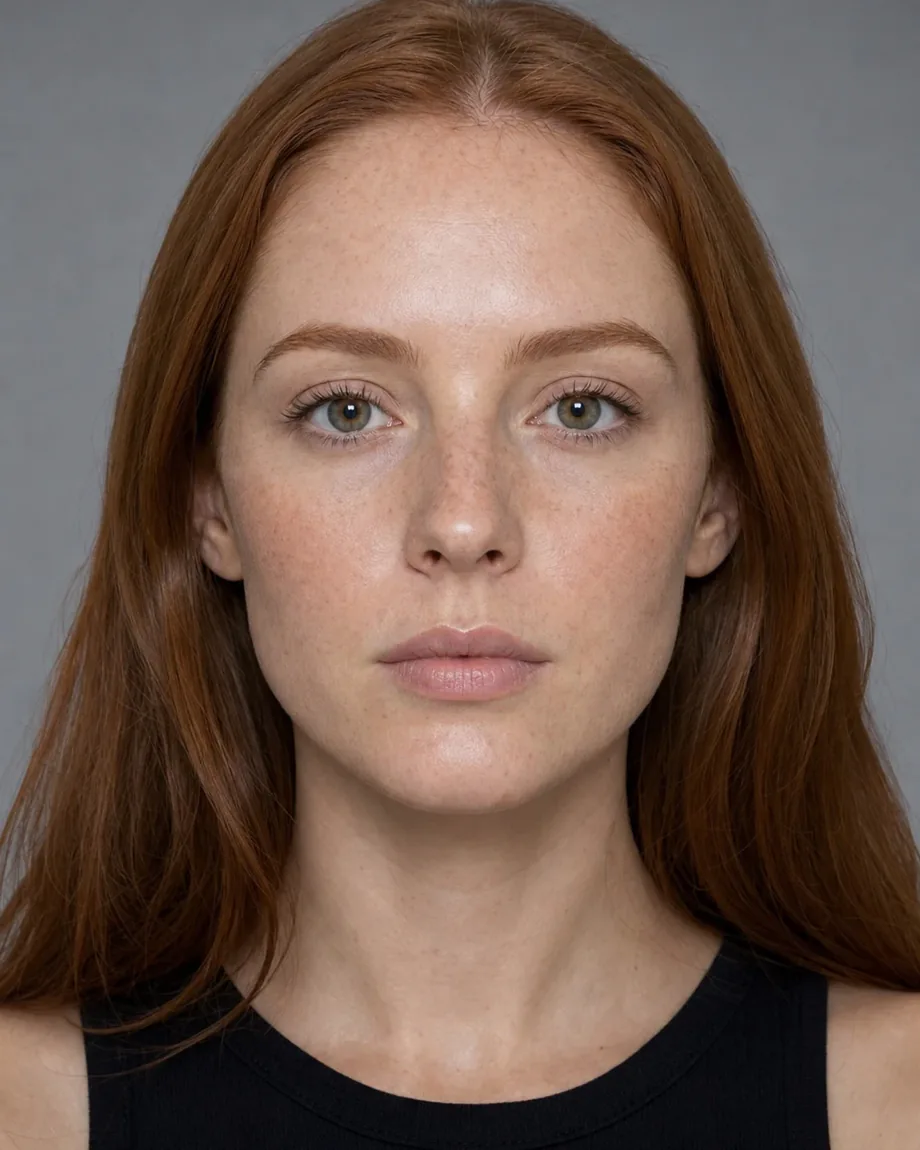
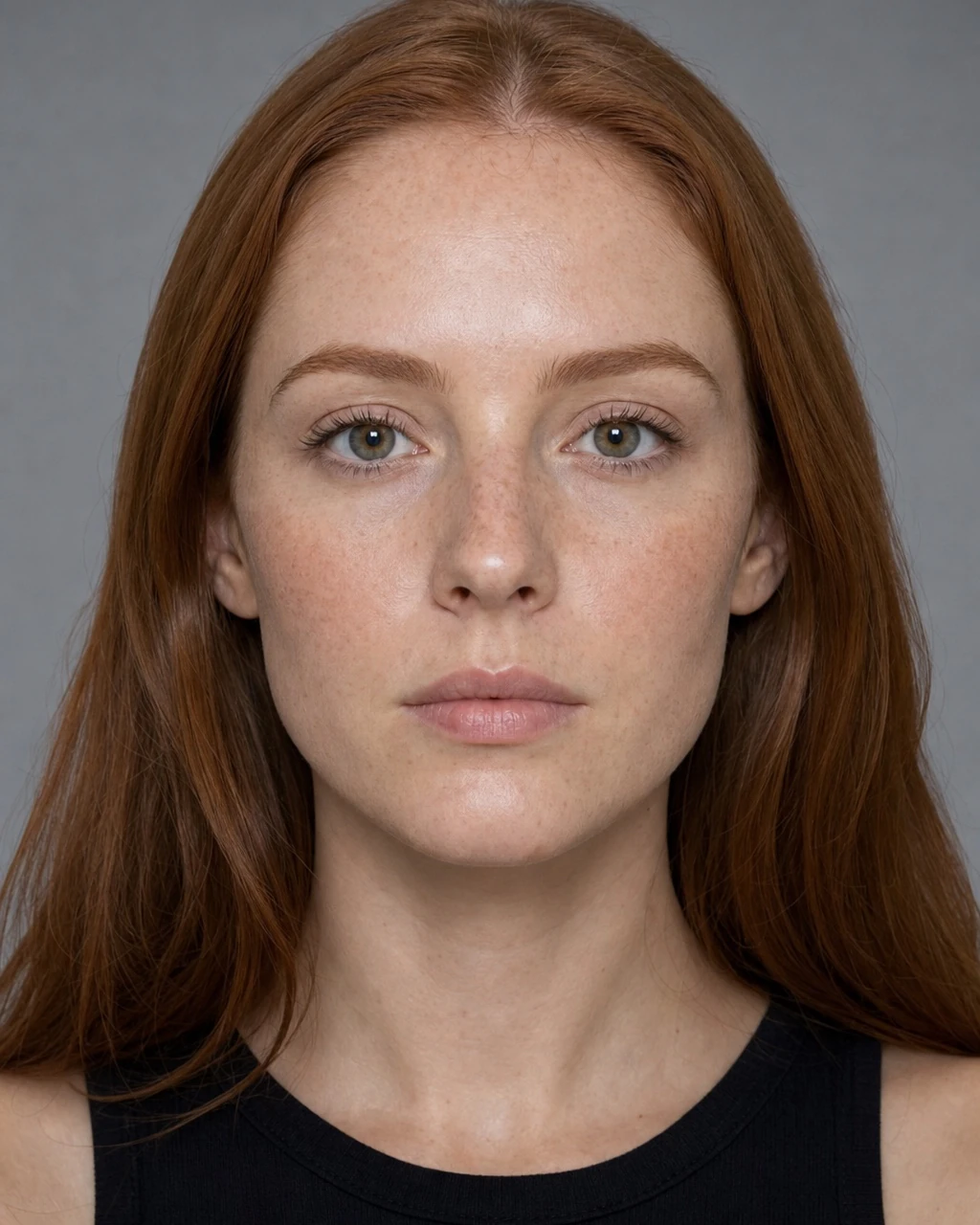 BeforeAfter
Keyhole lips · Restylane Kysse
Freckled redhead · Petite lips
Before 0.5 mLKeyhole lips · Restylane KysseOpen Freckled redhead in the demo 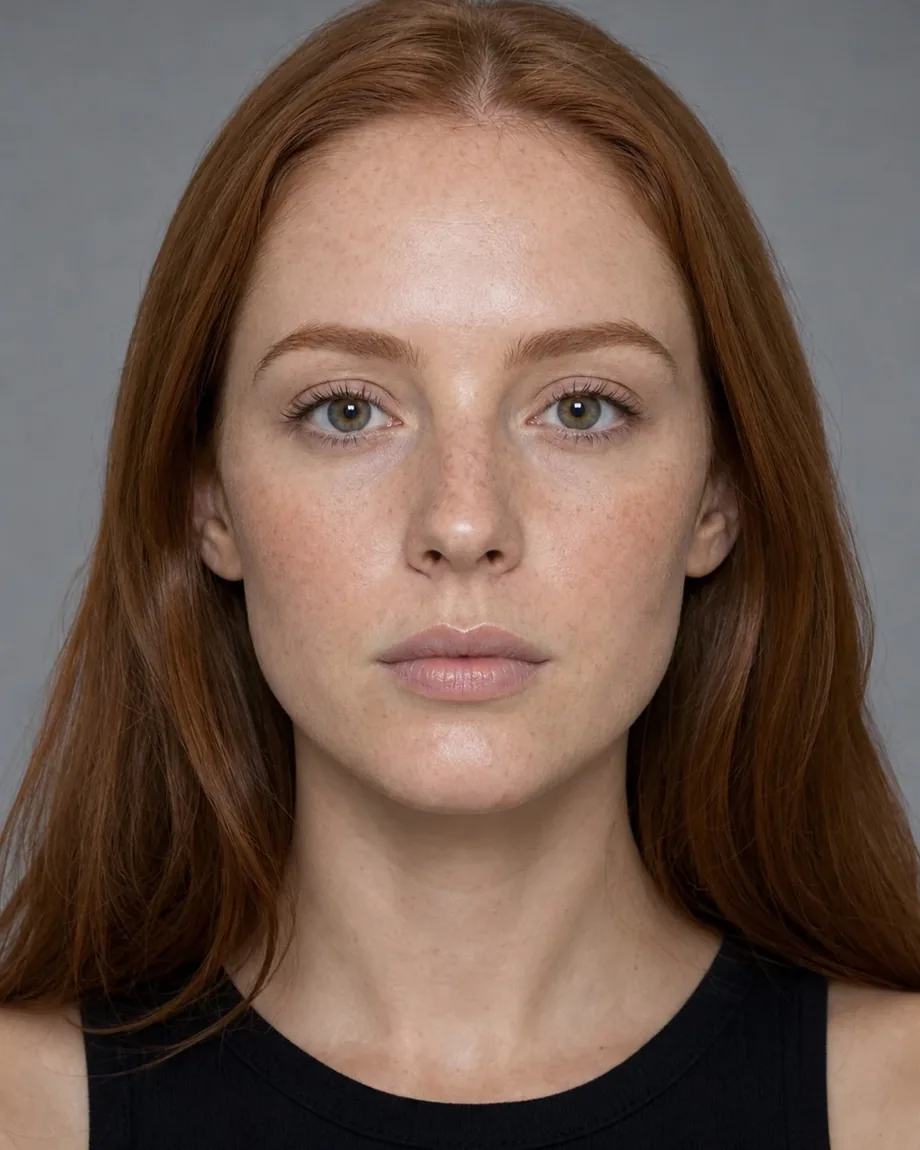
0.75 mLKeyhole lips · Restylane KysseOpen Freckled redhead in the demo 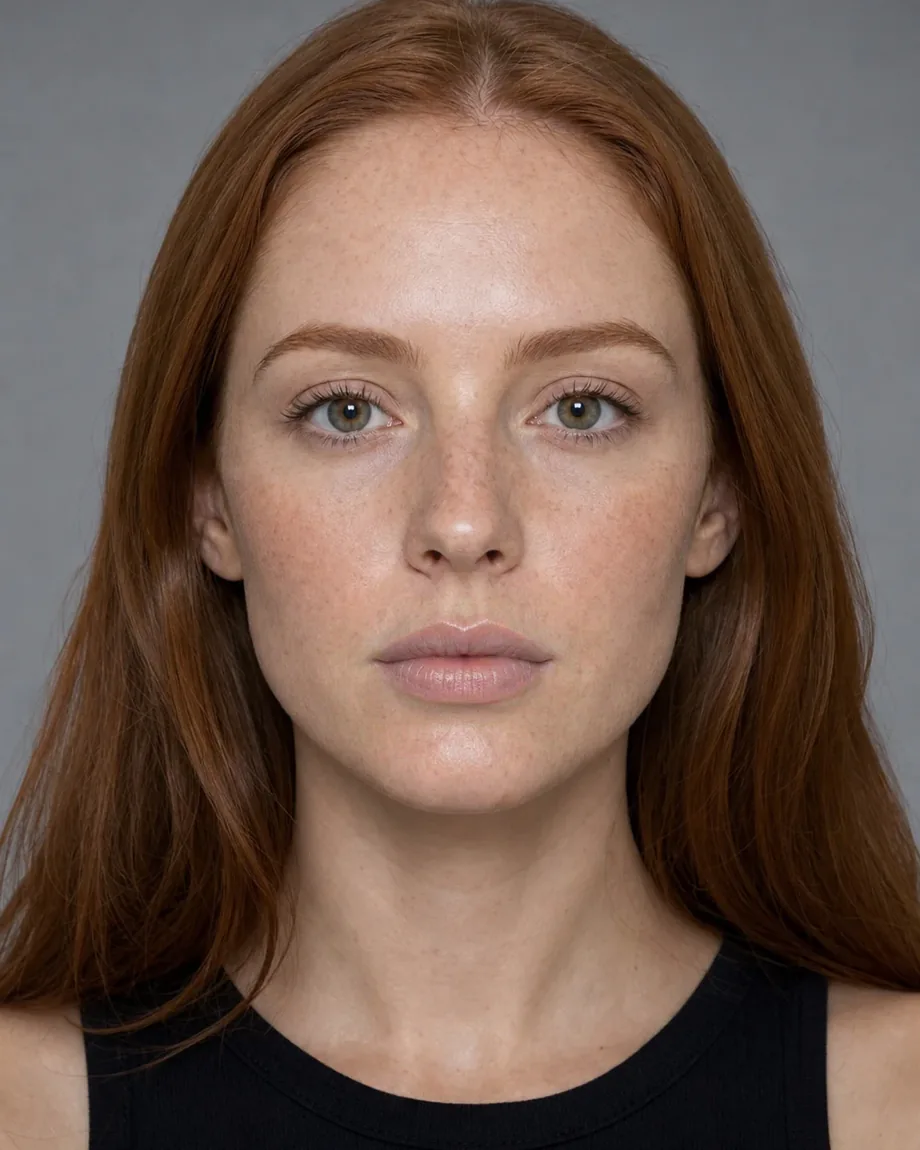
1.0 mLKeyhole lips · Restylane KysseOpen Freckled redhead in the demo 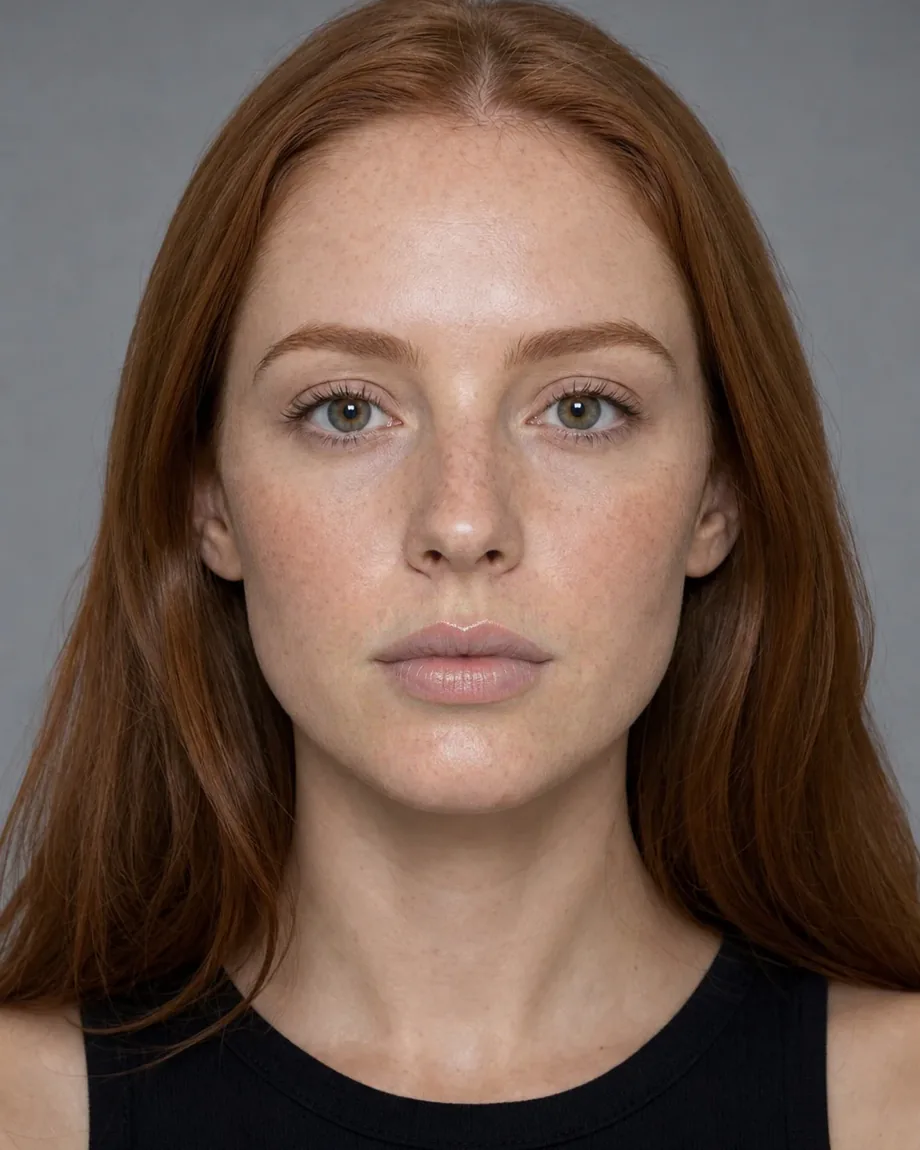
1.5 mLKeyhole lips · Restylane KysseOpen Freckled redhead in the demo 
2.0 mLKeyhole lips · Restylane KysseOpen Freckled redhead in the demo
East Asian bob · Slim lips

Before 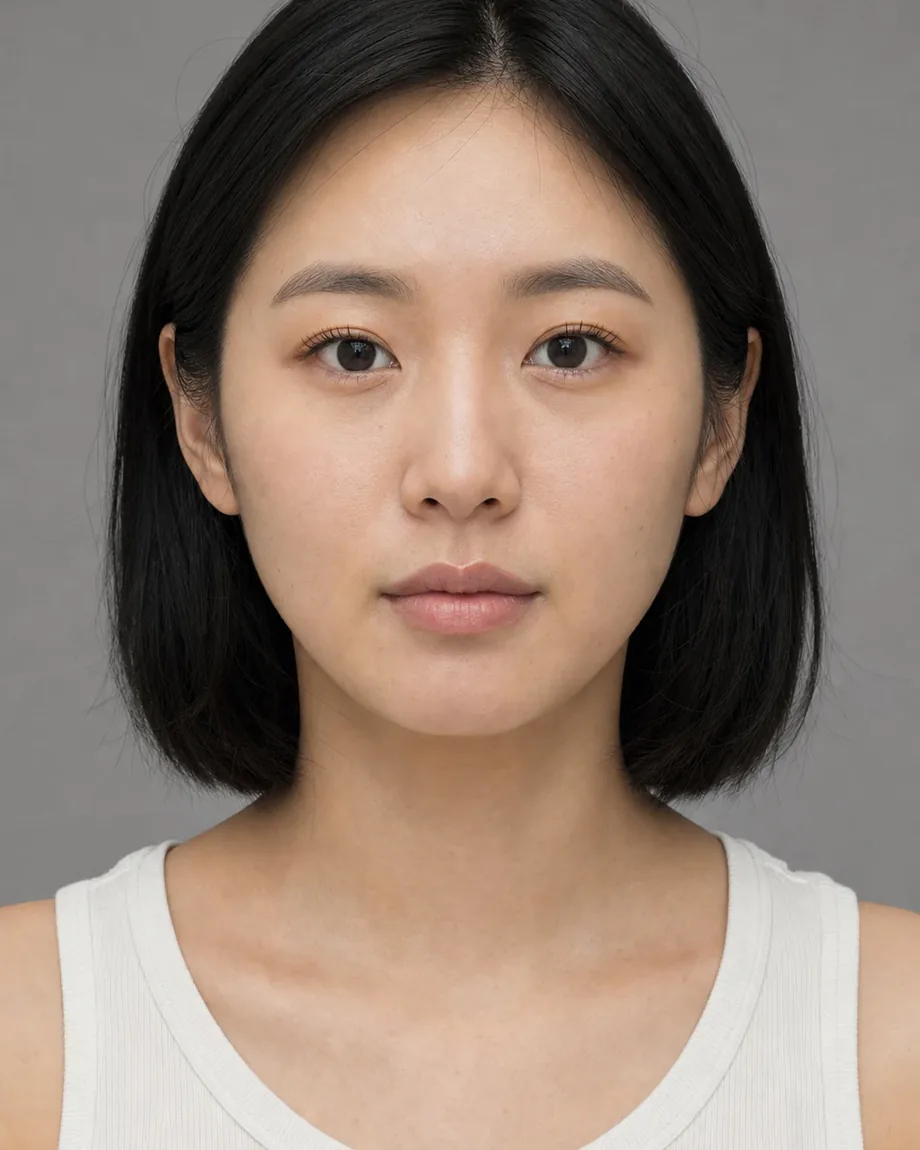
0.5 mLKeyhole lips · Restylane KysseOpen East Asian bob in the demo 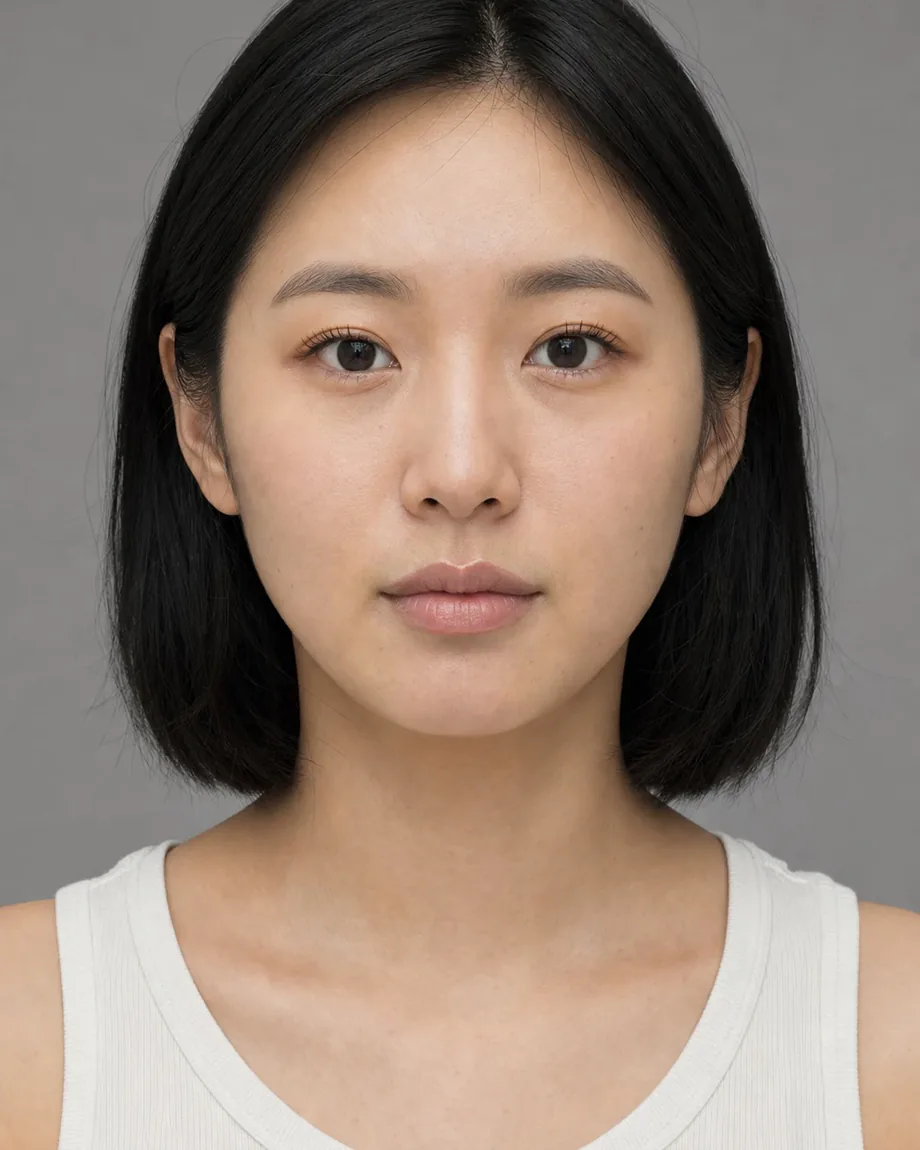
0.75 mLKeyhole lips · Restylane KysseOpen East Asian bob in the demo 
1.0 mLKeyhole lips · Restylane KysseOpen East Asian bob in the demo 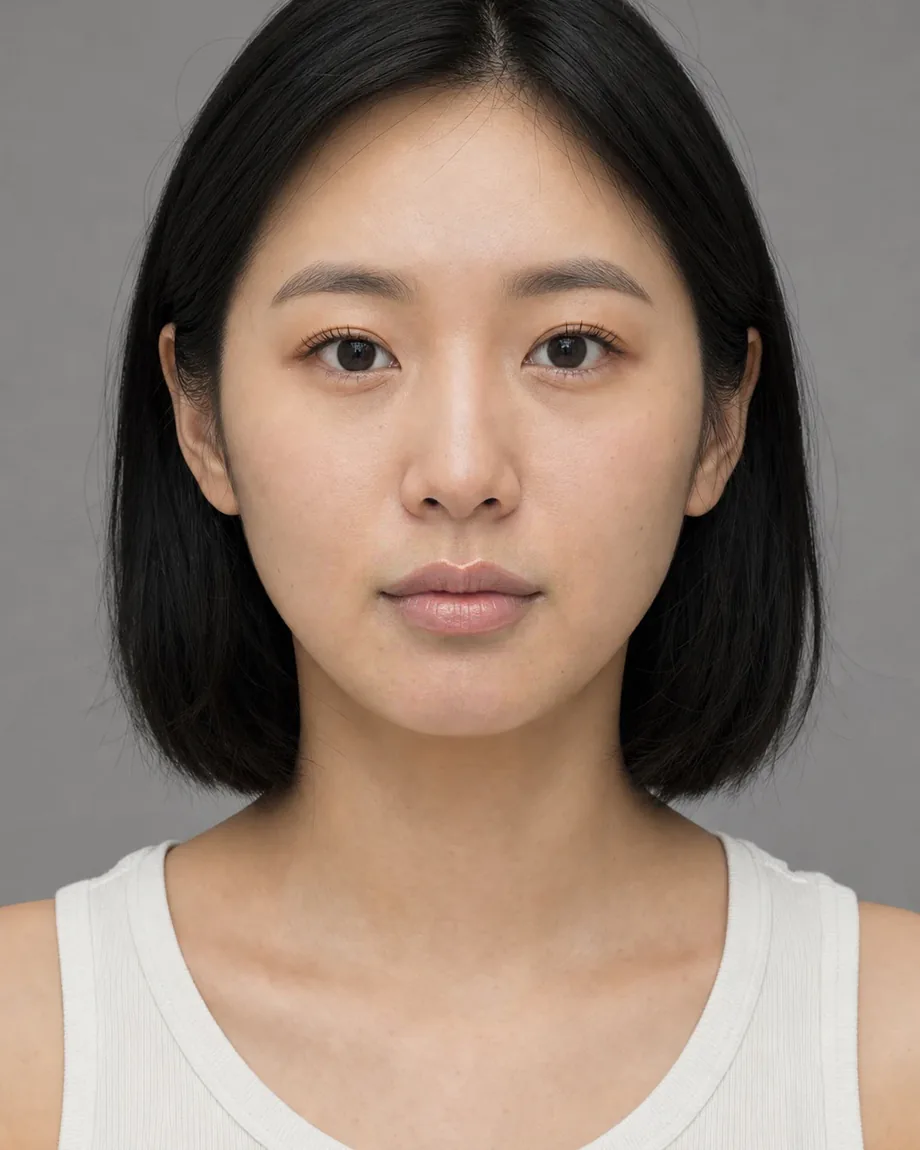
1.5 mLKeyhole lips · Restylane KysseOpen East Asian bob in the demo 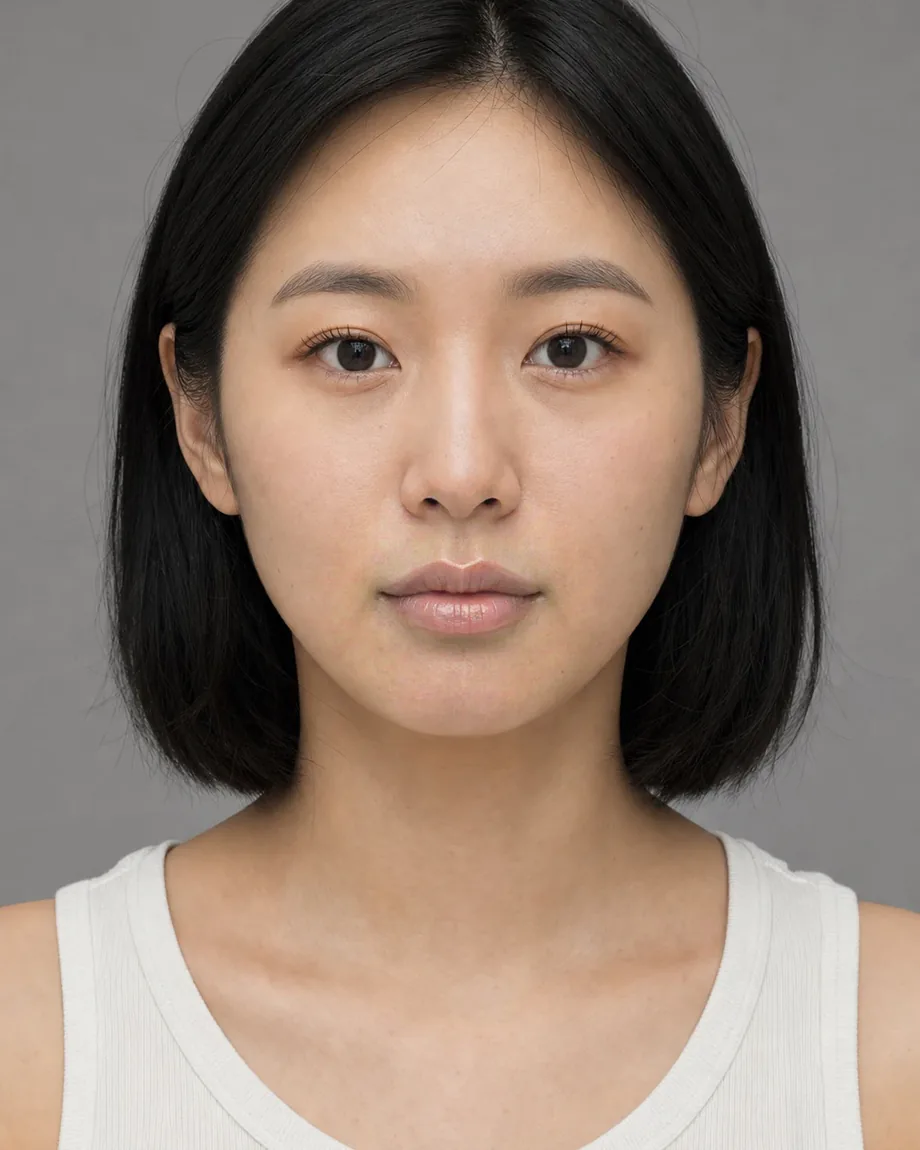
2.0 mLKeyhole lips · Restylane KysseOpen East Asian bob in the demo
Deep skin sleek bun · Slim lips
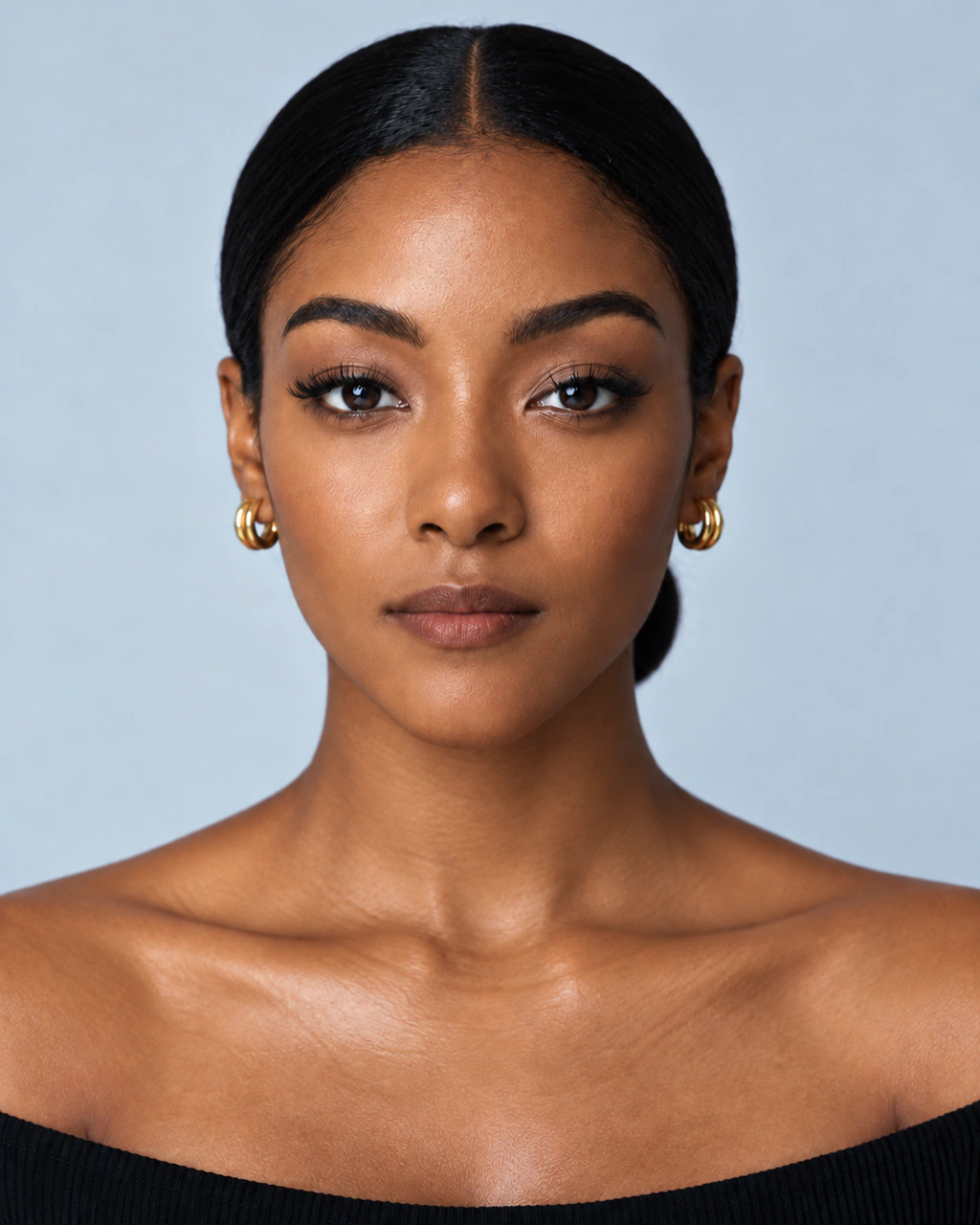
Before 
0.5 mLKeyhole lips · Restylane KysseOpen Deep skin sleek bun in the demo 
0.75 mLKeyhole lips · Restylane KysseOpen Deep skin sleek bun in the demo 
1.0 mLKeyhole lips · Restylane KysseOpen Deep skin sleek bun in the demo 
1.5 mLKeyhole lips · Restylane KysseOpen Deep skin sleek bun in the demo 
2.0 mLKeyhole lips · Restylane KysseOpen Deep skin sleek bun in the demo
Long-hair brunette · Defined lips

Before 
0.5 mLKeyhole lips · Restylane KysseOpen Long-hair brunette in the demo 
0.75 mLKeyhole lips · Restylane KysseOpen Long-hair brunette in the demo 
1.0 mLKeyhole lips · Restylane KysseOpen Long-hair brunette in the demo 
1.5 mLKeyhole lips · Restylane KysseOpen Long-hair brunette in the demo 
2.0 mLKeyhole lips · Restylane KysseOpen Long-hair brunette in the demo
Blonde pixie · Slim lips
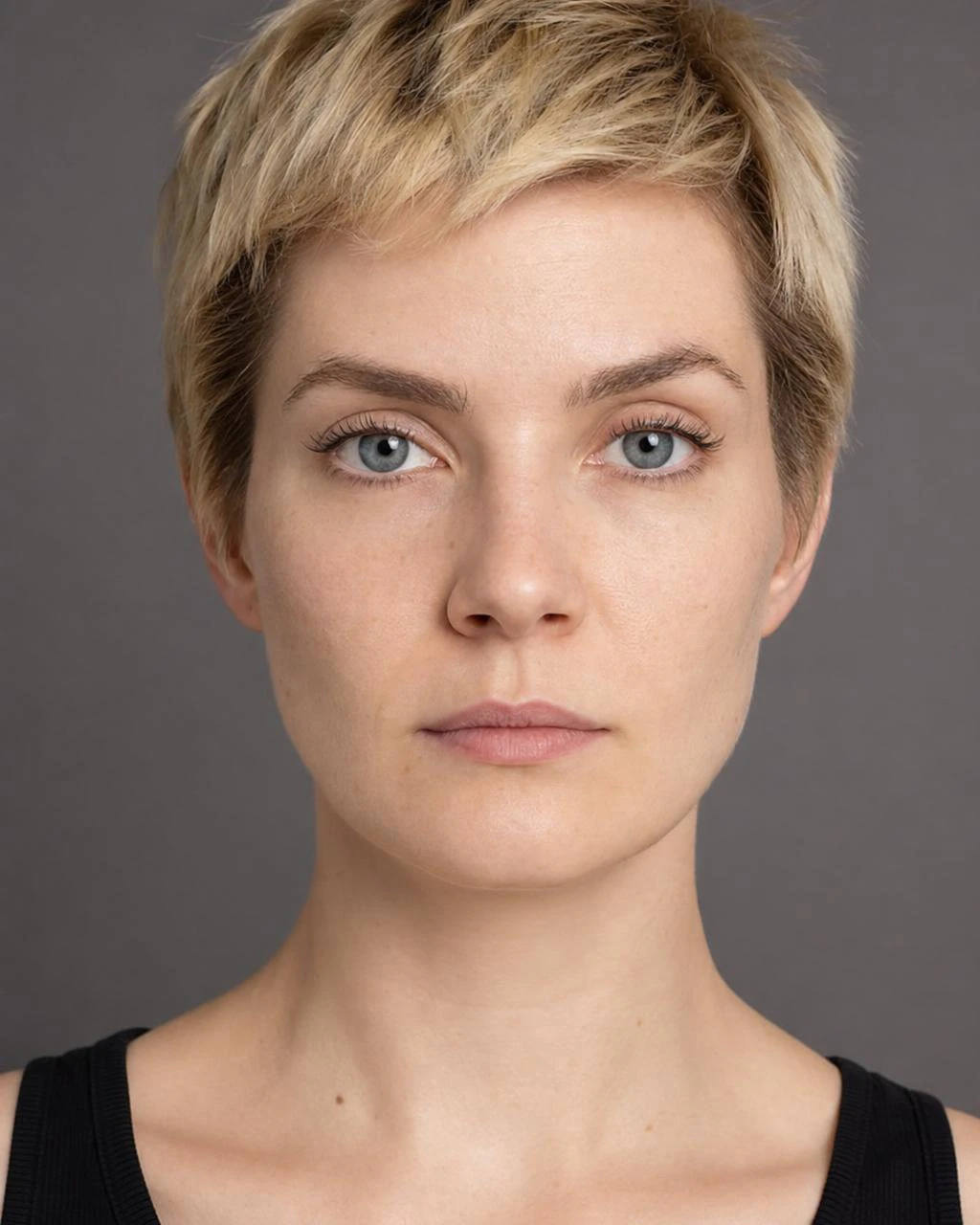
Before 
0.5 mLKeyhole lips · Restylane KysseOpen Blonde pixie in the demo 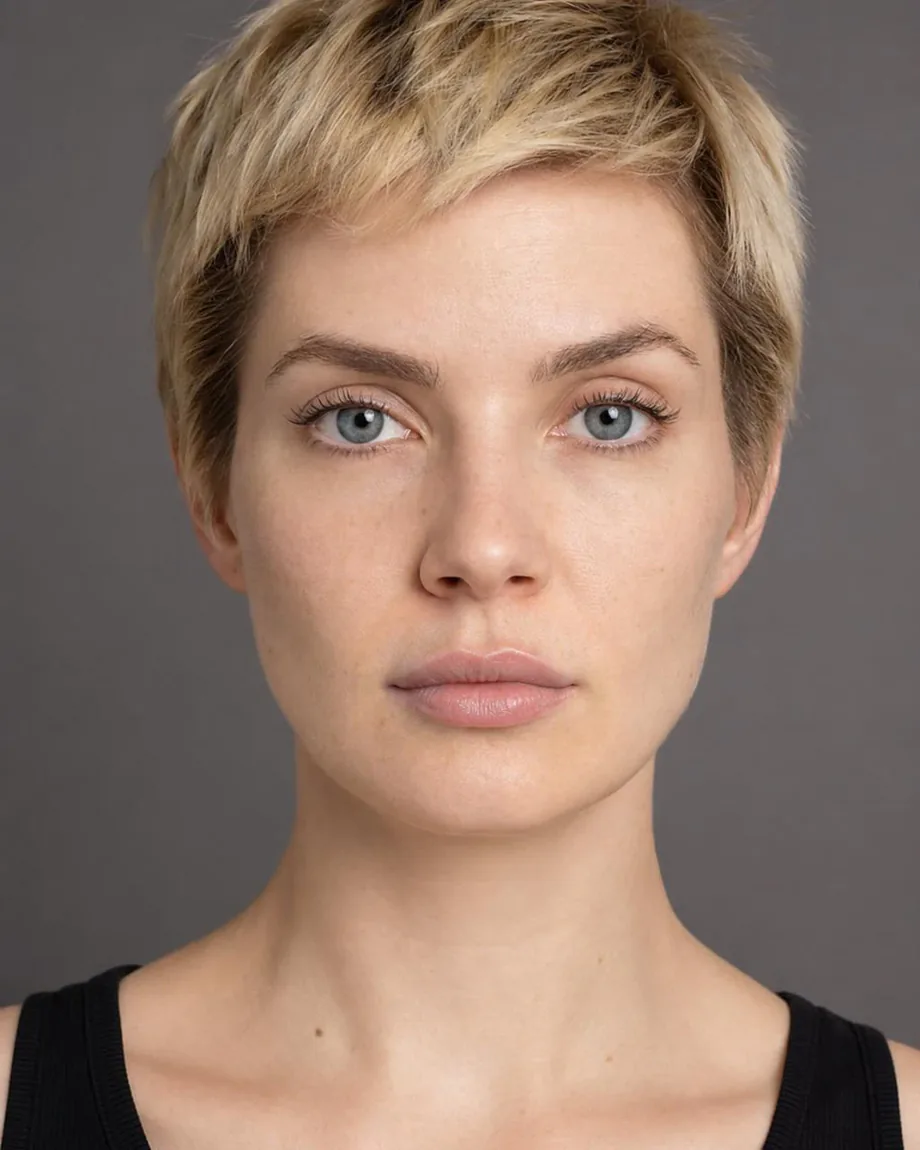
0.75 mLKeyhole lips · Restylane KysseOpen Blonde pixie in the demo 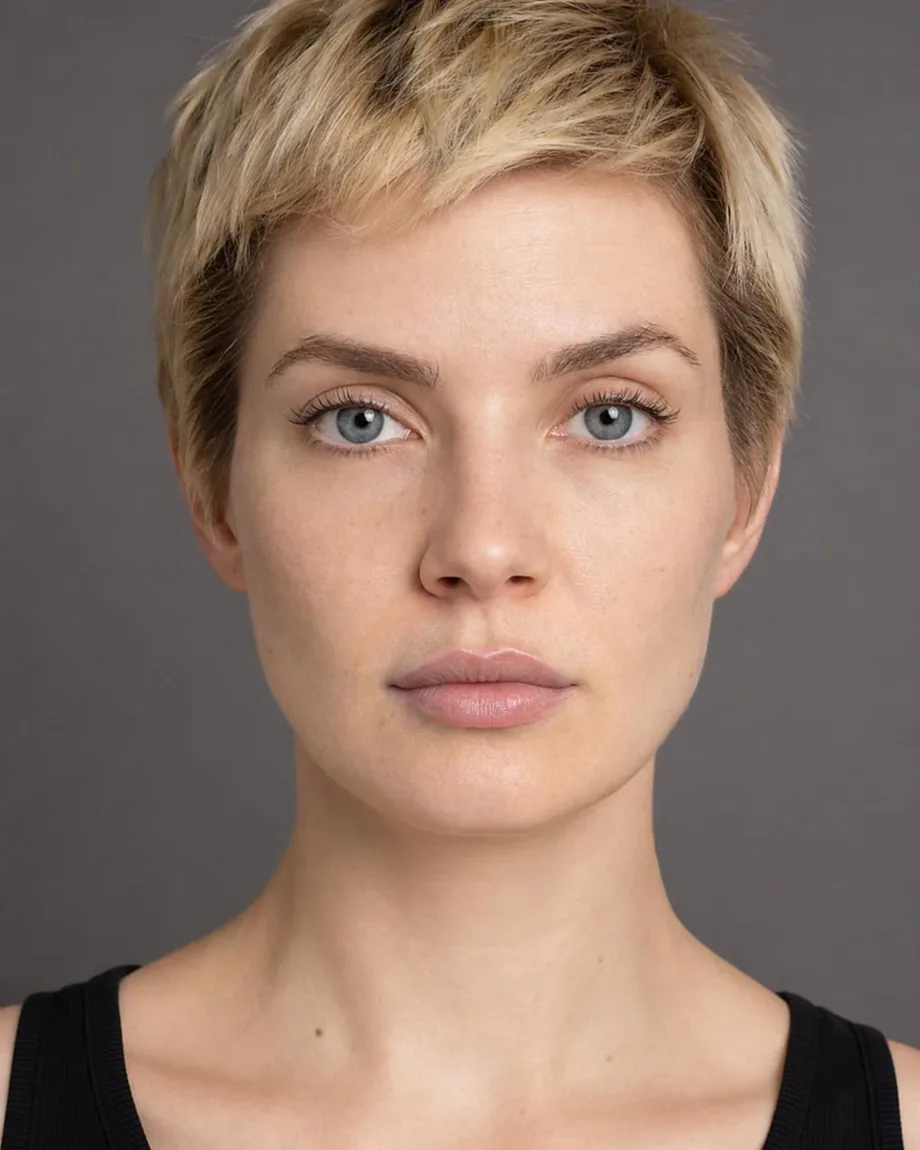
1.0 mLKeyhole lips · Restylane KysseOpen Blonde pixie in the demo 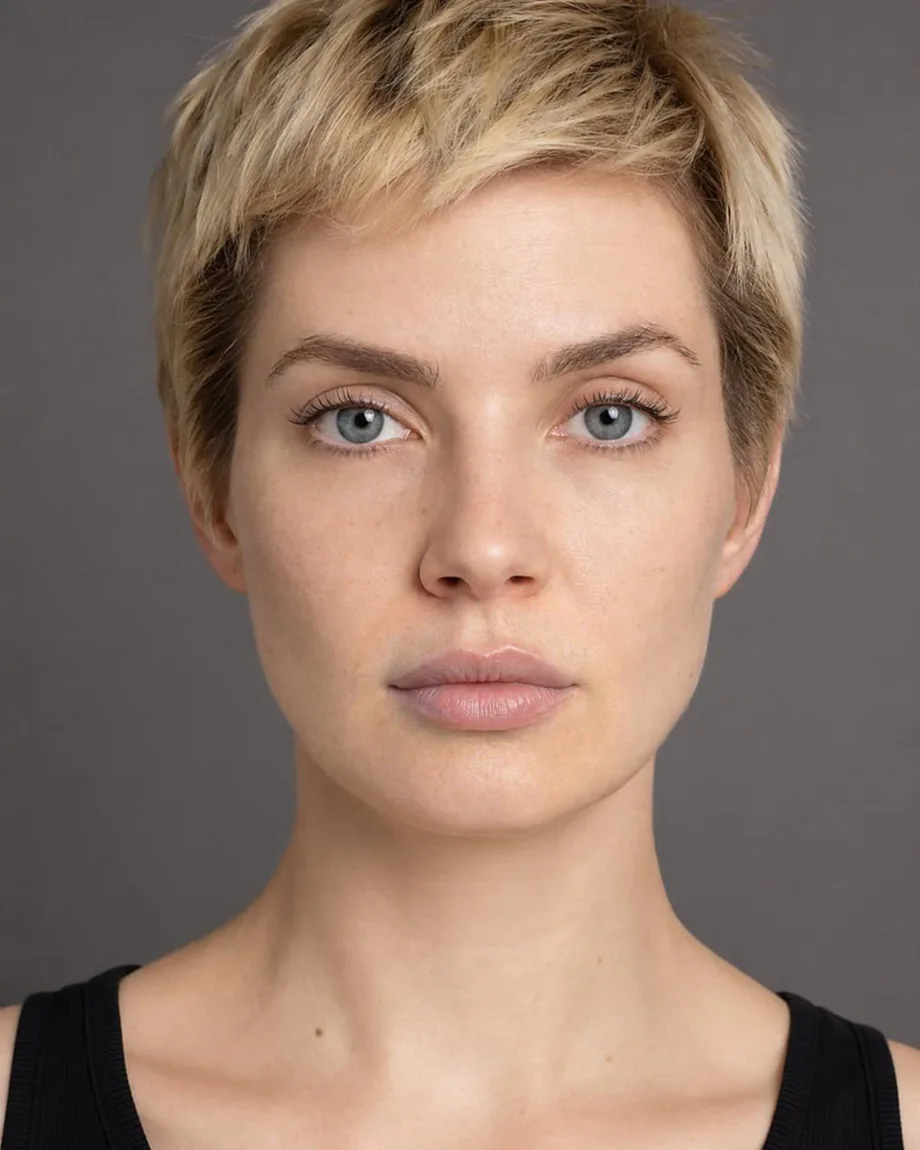
1.5 mLKeyhole lips · Restylane KysseOpen Blonde pixie in the demo 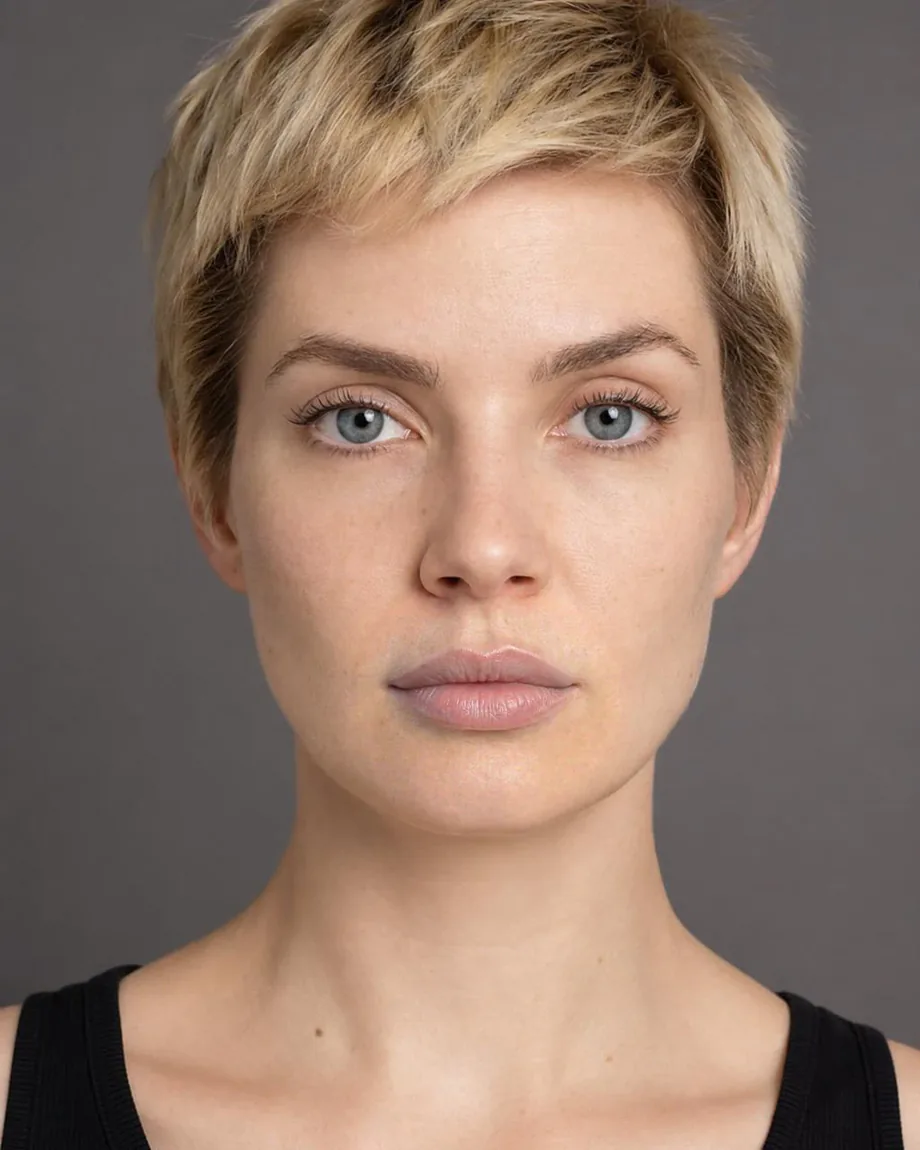
2.0 mLKeyhole lips · Restylane KysseOpen Blonde pixie in the demo
Young Mexican brunette · Slim lips

Before 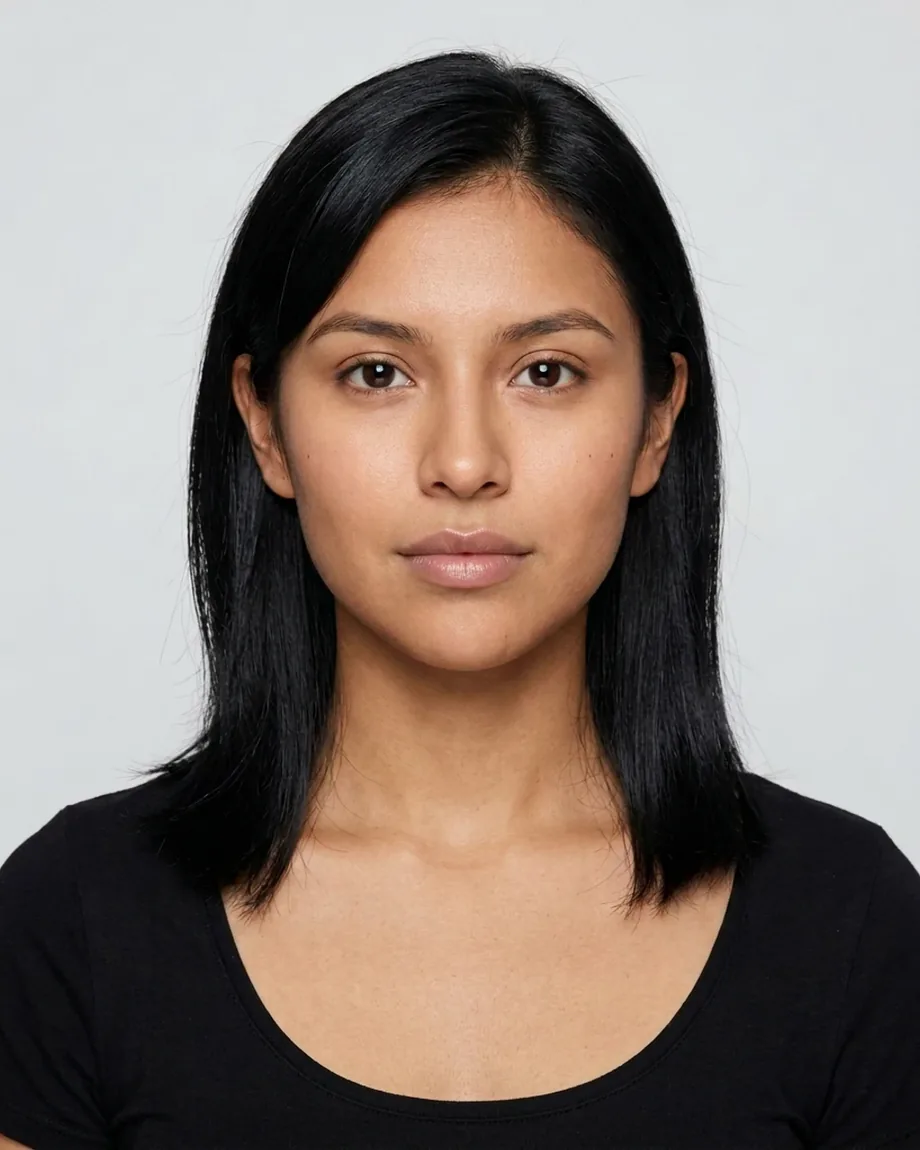
0.5 mLKeyhole lips · Restylane KysseOpen Young Mexican brunette in the demo 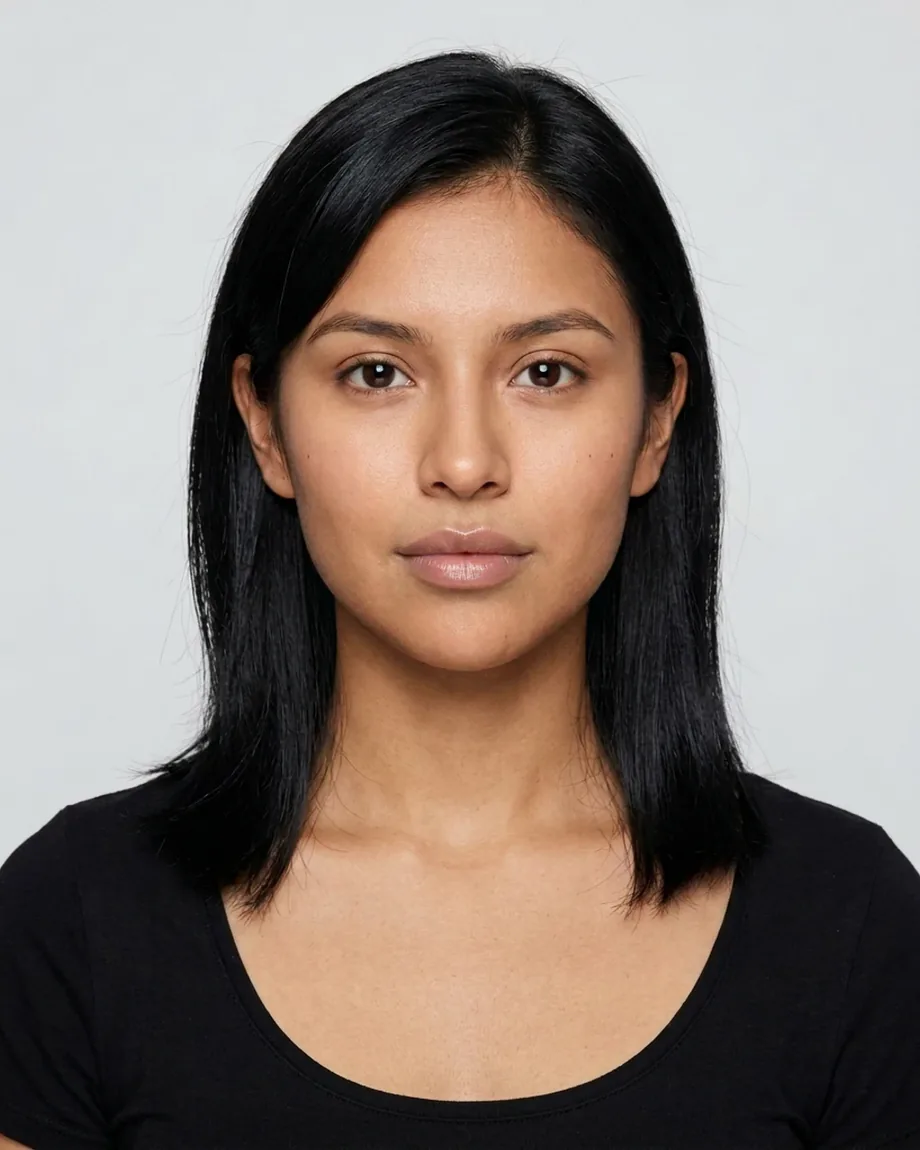
0.75 mLKeyhole lips · Restylane KysseOpen Young Mexican brunette in the demo 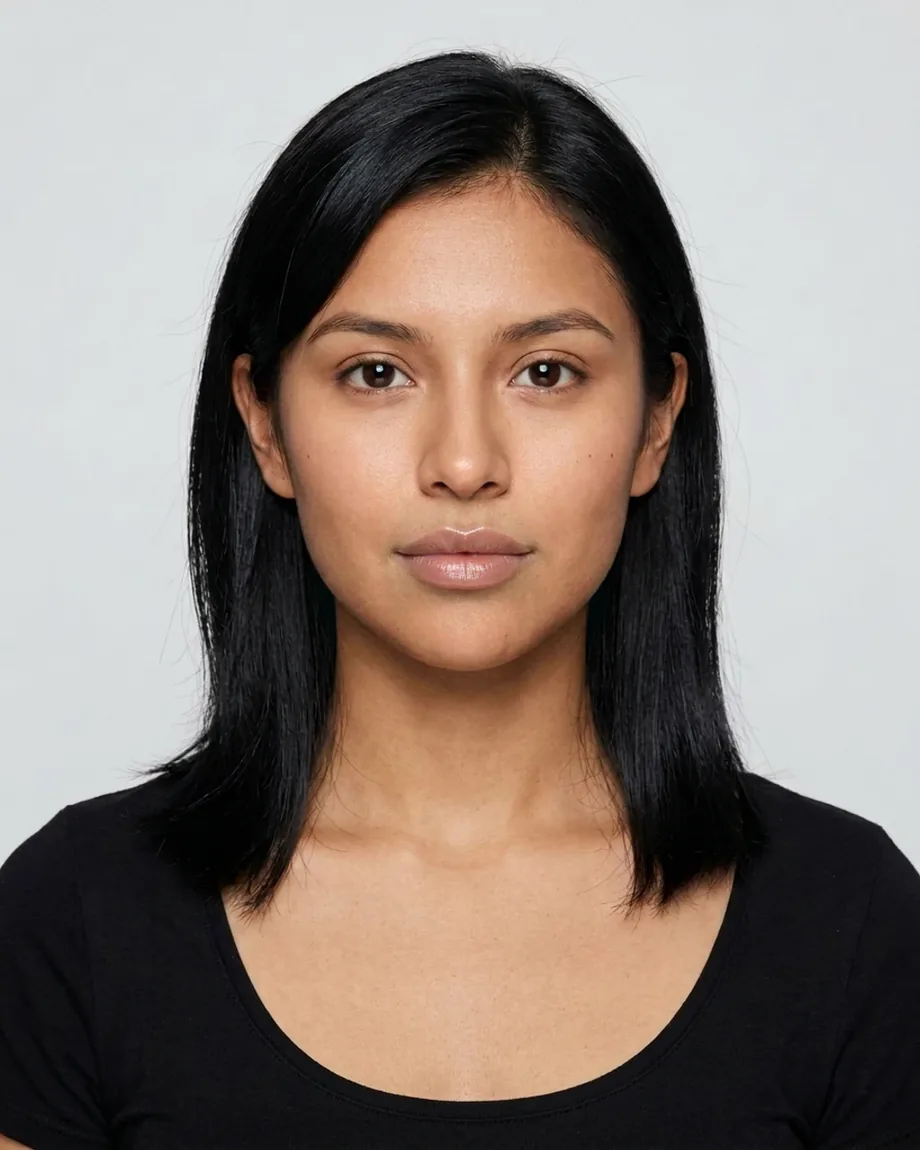
1.0 mLKeyhole lips · Restylane KysseOpen Young Mexican brunette in the demo 
1.5 mLKeyhole lips · Restylane KysseOpen Young Mexican brunette in the demo 
2.0 mLKeyhole lips · Restylane KysseOpen Young Mexican brunette in the demo
Young Spanish brunette · Slim lips

Before 
0.5 mLKeyhole lips · Restylane KysseOpen Young Spanish brunette in the demo 
0.75 mLKeyhole lips · Restylane KysseOpen Young Spanish brunette in the demo 
1.0 mLKeyhole lips · Restylane KysseOpen Young Spanish brunette in the demo 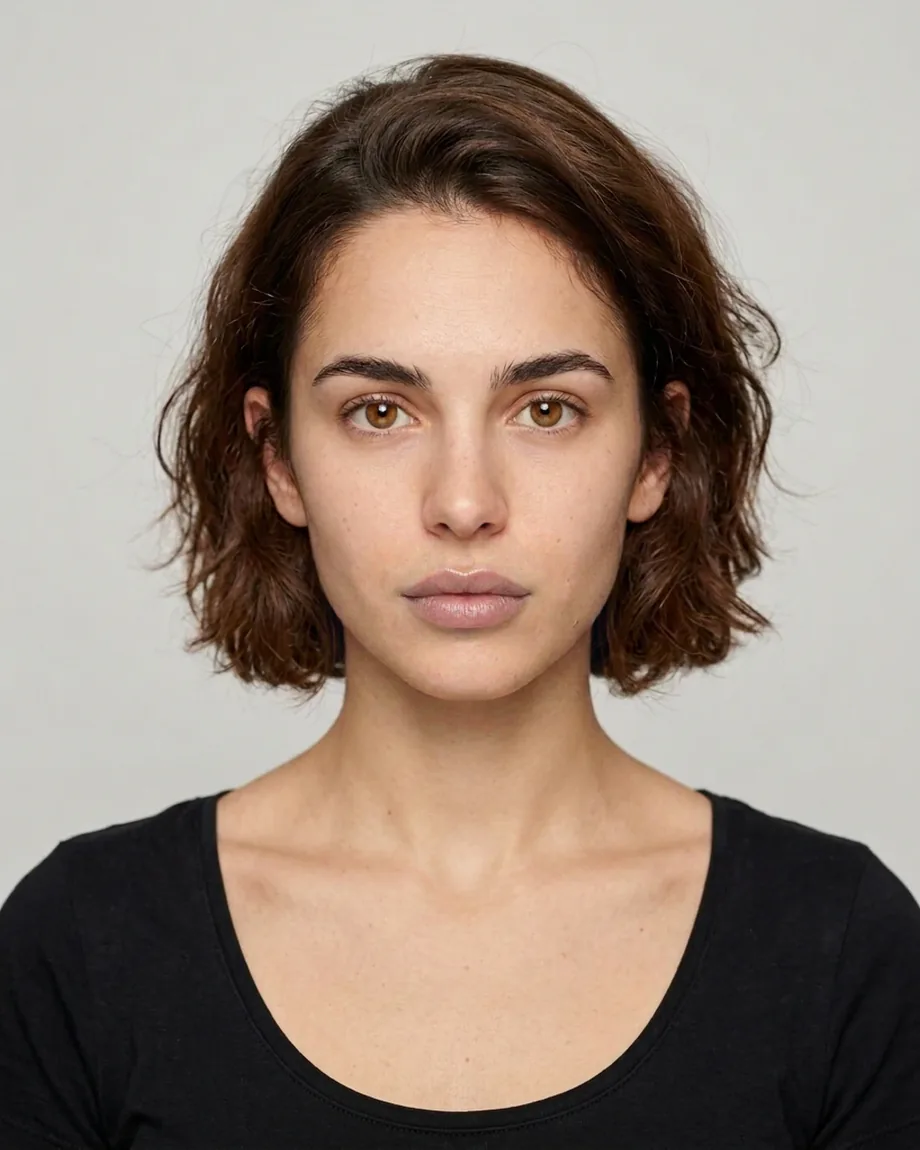
1.5 mLKeyhole lips · Restylane KysseOpen Young Spanish brunette in the demo 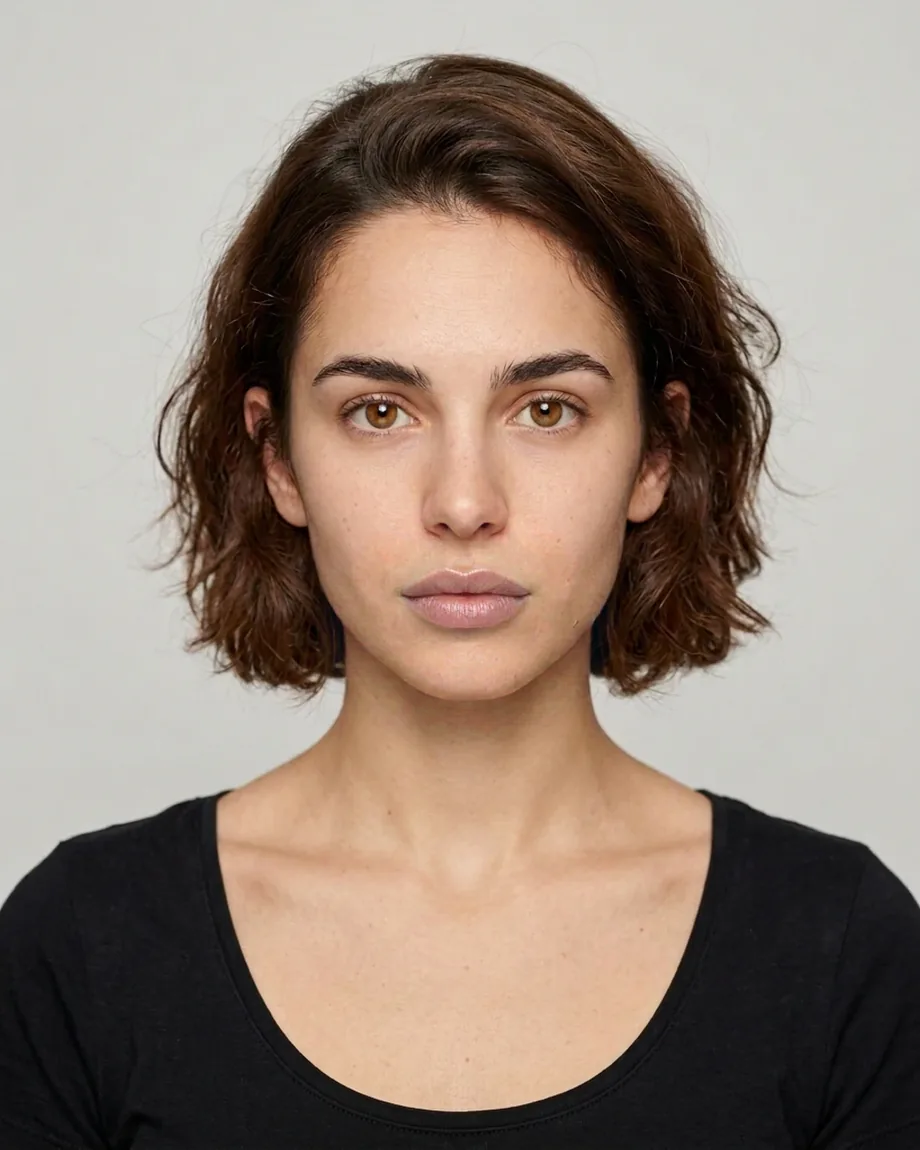
2.0 mLKeyhole lips · Restylane KysseOpen Young Spanish brunette in the demo
Slavic blonde · Slim lips

Before 
0.5 mLKeyhole lips · Restylane KysseOpen Slavic blonde in the demo 
0.75 mLKeyhole lips · Restylane KysseOpen Slavic blonde in the demo 
1.0 mLKeyhole lips · Restylane KysseOpen Slavic blonde in the demo 
1.5 mLKeyhole lips · Restylane KysseOpen Slavic blonde in the demo 
2.0 mLKeyhole lips · Restylane KysseOpen Slavic blonde in the demo
LookPrep is not a medical provider and does not sell or administer treatment. A preview is an illustration, not a prediction. Product choice, amount, placement and candidacy are decisions for a qualified clinician, and the product labeling and consent discussion remain the authority.
Private preview
Bring a picture of your goal to the consultation
- Free Natural preview · 8 previews $19 · 20 previews $29
- Private by default
- Delete on request
Sources and review status
U.S. product labelling, study endpoints and recorded reactions. Sources checked on . This editorial reference has no clinical reviewer. Suggest a correction.
- Restylane Kysse · FDA safety and effectiveness summary, P140029/S021 · U.S. Food and Drug Administration
- Restylane Kysse · FDA PMA database entry, P140029/S021 · U.S. Food and Drug Administration
- Restylane Kysse · Patient labelling, P140029/S021 · U.S. Food and Drug Administration